
Dreams of Treasure Valley Transit
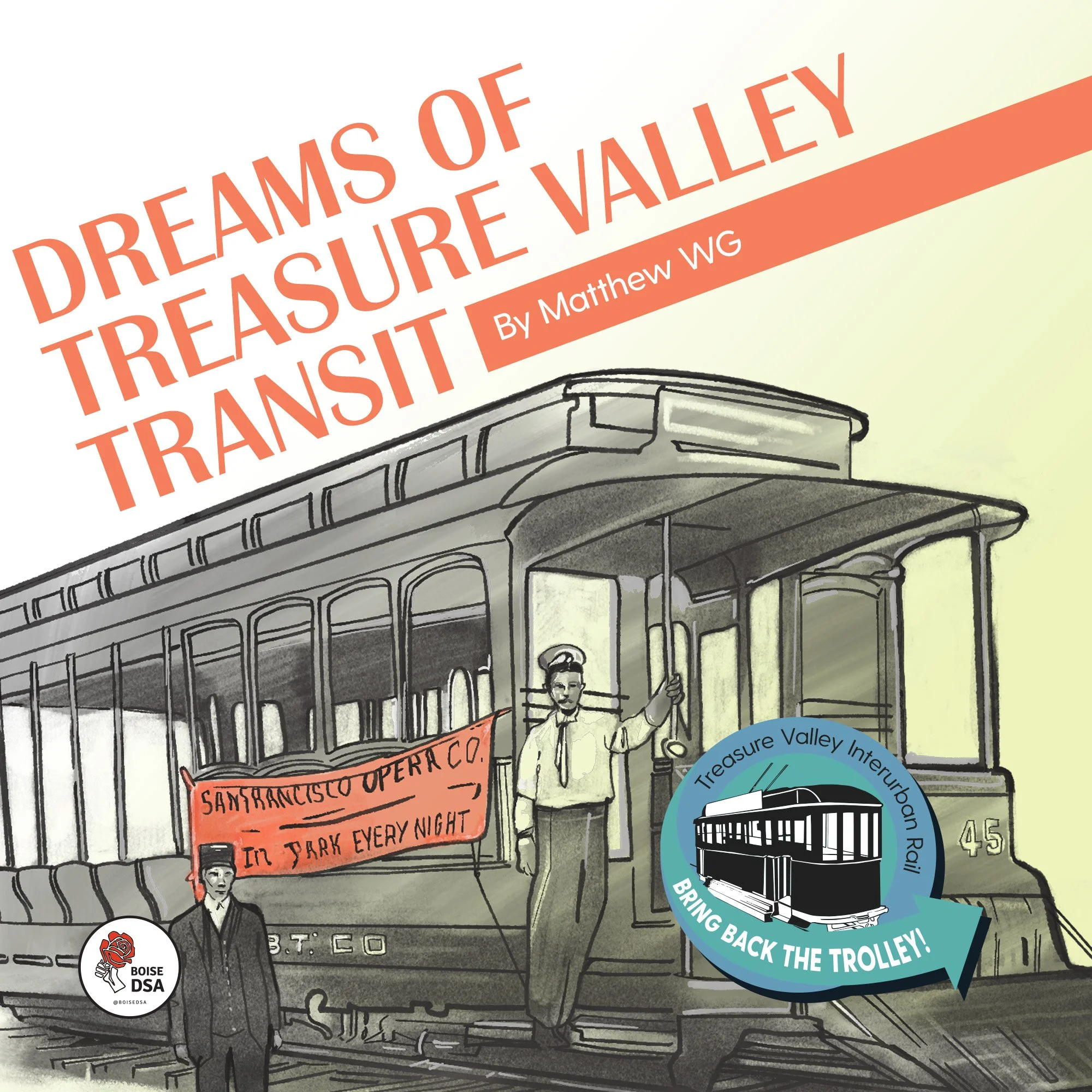
By Matthew WG, Illustration by AGG
It’s one of those hallmark beautiful Sunday afternoons in the Treasure Valley. You just finished eating a picnic lunch with a couple of friends in a park by the Boise River, and your gear is all packed up to take home. Before you can leave,an all-electric trolley car pulls into a little station a short distance away. On the side of the trolley, a sign beams out the message “Live Music Every Night in Riverside Park at 5PM.” One of your friends suggests you all jump on the trolley and go watch a band. The concert series will only be going for another week, and none of you have made it out for a performance yet. It’s agreed. You pile into the open-air front compartment of the trolley with your friends and off you go.
It’s a twenty minute ride from your picnic spot out to east Boise—a familiar route for you. Every day you take the very same trolley into work and back home at the end of the day. It’s on a fifteen minute schedule, so you don’t have to worry about missing it; there’s always another one coming up shortly. As you make your way through downtown, in the alternating shadows and sunlight of the afternoon, you see a few cars out on the roads but not many. The Interurban Trolley system is so inexpensive and easy to use that most people either don’t have a car or use ride shares when the trolley is impractical.
This probably sounds like a futuristic utopian pipedream that working people in the Treasure Valley might imagine for themselves–a world where transportation to work and leisure is inexpensive, clean, and stress-free. It’s no pipedream; this world was a reality from 1891 to 1928, when an electric trolley system connected the entire Treasure Valley from Boise all the way out to the College of Idaho in Caldwell.
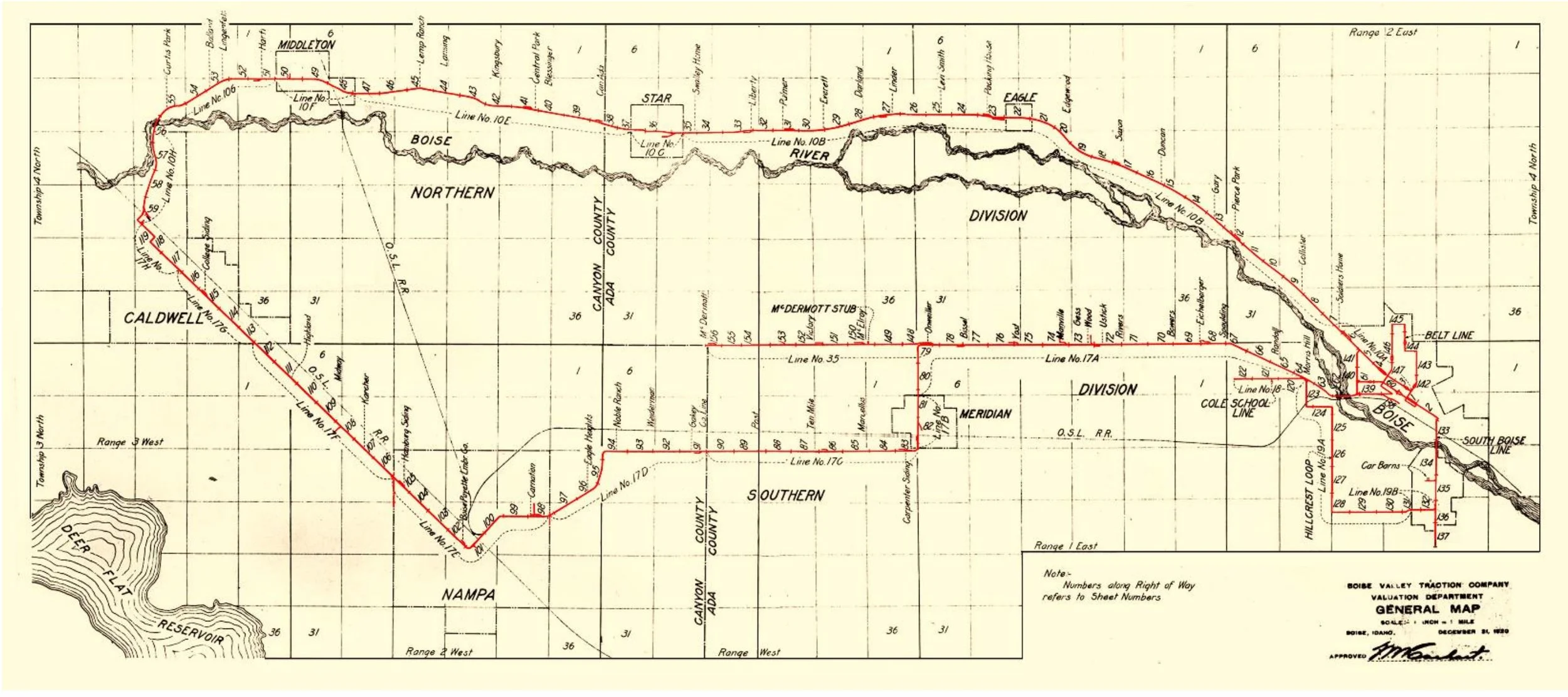
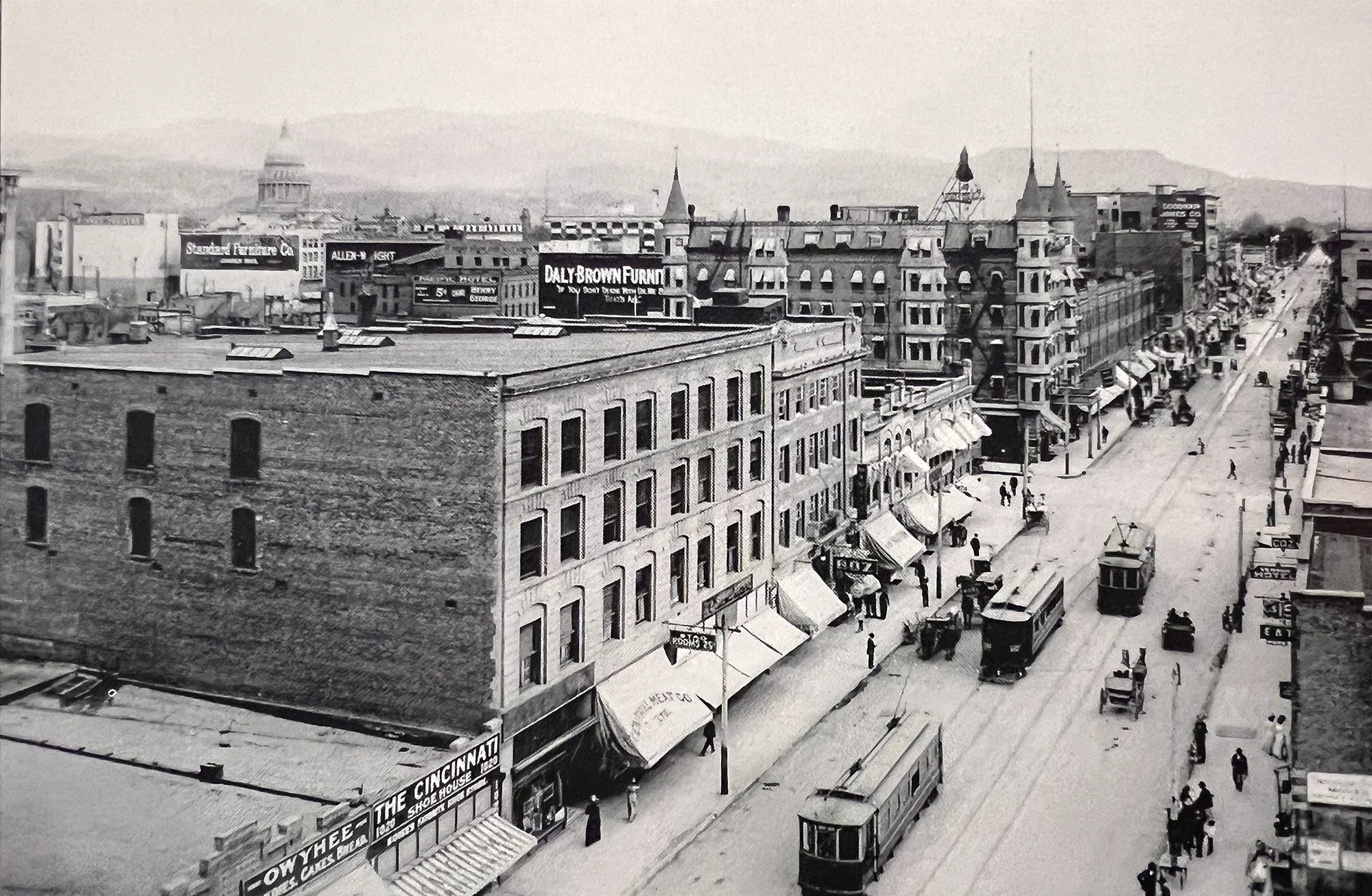
The trolley system in the Treasure Valley first started running on a 2.5 mile track through downtown in 1891, the year after Idaho was granted statehood.[1] Over the next ten years, the tracks expanded to 6 miles, and by 1912 the trolley system had developed into a 40 mile loop connecting the entire Treasure Valley. Residents in Meridian, Middleton, Star, Nampa, and Caldwell all had conveniently situated trolley stops that gave them access to swift interurban travel that had previously been impossible.[2]
The electric trolley was enormously popular, eventually boasting 2.1 million fares in a state with fewer than 200,000 people.[3]
In the 1970s the Idaho Historical Society set about recording interviews with aging Idaho residents about their experiences riding the by then long defunct trolley. The recordings are still available upon request and their contents tend to a kind of magical nostalgia that feels infectious. It’s difficult to listen for long without imagining the world that the interviewees remember so fondly.
By the late 1920s electric trolley systems around the country were being abandoned, and the Treasure Valley was no exception. As much as the interurban electric trolley system had benefited the lives of working people in the Treasure Valley, it was not built for them. Constructed during The Gilded Age—a period characterized by massive and growing wealth inequality—the trolley system had been designed to serve the interests of a small group of capitalist owners and industry magnates. In a time before automobiles were practical or easily attainable, it made sense to capitalists to build a transportation system that could taxi them around the valley to various asset holdings and board meetings, and port the products of their agricultural enterprises to freight train hubs. The fact that fare fees collected from working people could essentially make that transportation free for the capitalist class was just a cherry on top of their ice cream. But when the wealthiest Idahoans all started buying personal automobiles and lobbying to improve roads, their interest in the trolley system waned. It was during this time that collaboration between capitalists like Henry Ford and the federal government locked in our future as an automobile dependent society.[4]
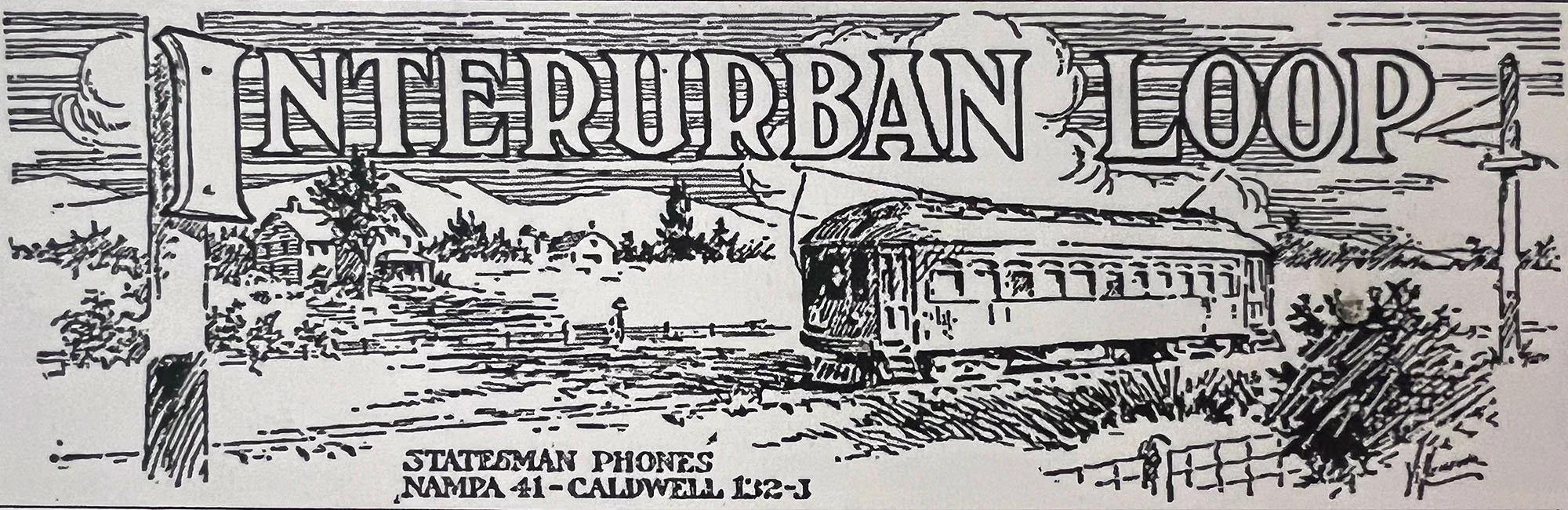
All that to say that when the interurban trolley system in the Treasure Valley shut down in 1928, it wasn’t because the workers didn’t want it. They did. It was because the capitalists didn’t need it anymore. New Deal era programs that might have salvaged electric trolley systems around the U.S. were still almost a decade away, and by the time they arrived, the trolley system in the Treasure Valley was beyond saving—a patchwork of abandoned rails and repurposed ticket stations.
Today, all that remains of the trolley system in the Treasure Valley are pictures and a few historical markers such as “The Cap” transit stop at the College of Idaho preserved for historical purposes. You can also visit south Boise’s Streetcar Plaza to see a skeletal sculpture titled “Ghost Streetcar” commemorating the trolley system that used to connect the Treasure Valley.
What would it take to bring the interurban trolley back to the Treasure Valley?
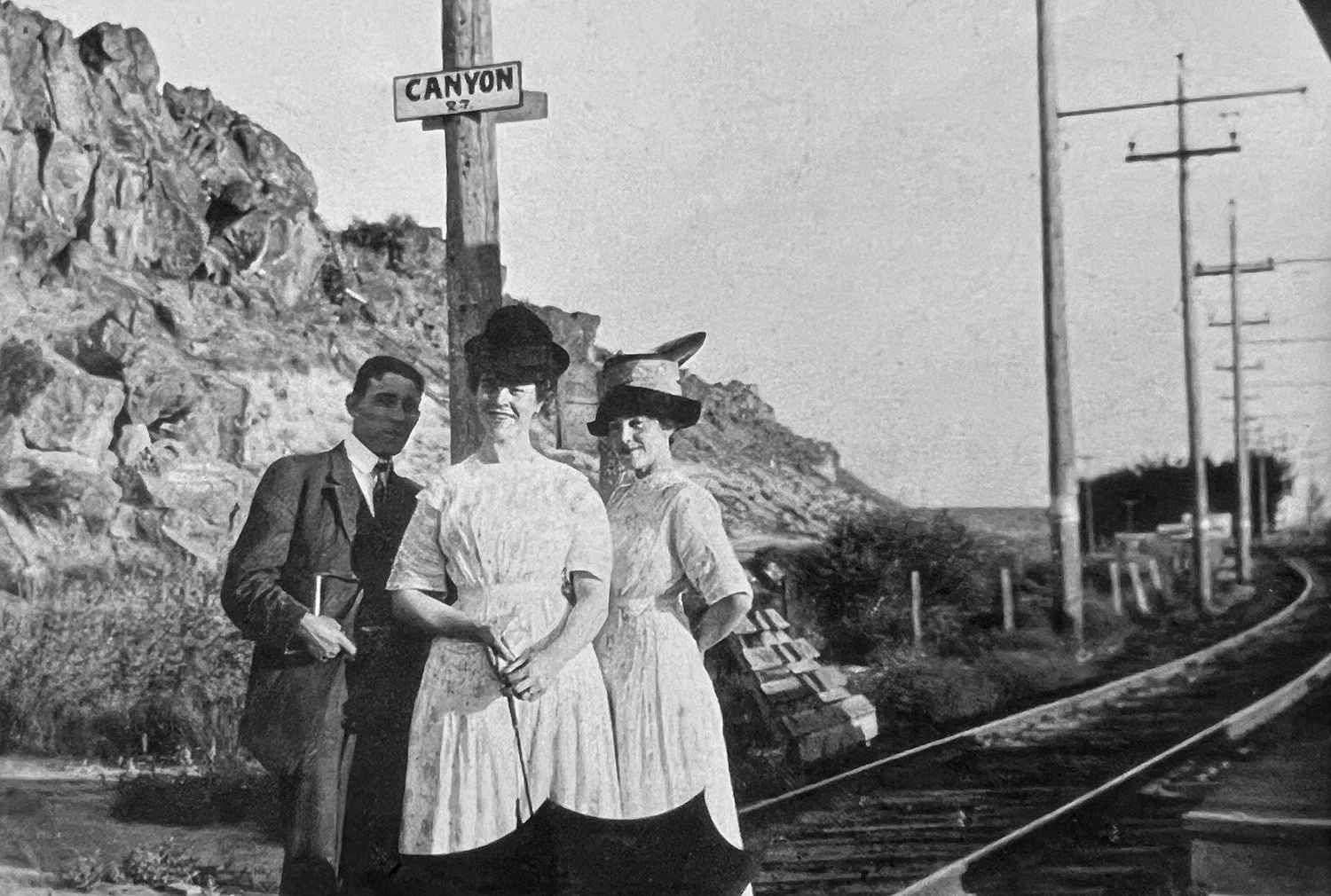
It continues to be a widely popular proposal across the political spectrum. The comments below were found under a photo of the old Treasure Valley trolley on Facebook. In 2009 a proposal to bring back the trolley was made by then mayor Dave Bieter and local city officials around that valley have spoken favorably about mass transit.[5] Nevertheless, the proposal was struck down and has continued to be a popular unrealized project.
In an age when automation and technology have brought us to levels of productivity unimaginable at the turn of the 20th century, why are so many of us sitting in cars spewing fumes into the air for hours while we attempt to make the twenty mile trek to and from work on I-84? It can be different.
We have everything we need to build an amazing all-electric transportation system in the Treasure Valley. Working people can demand it and working people can build it. This time we can build it for us. This is the first article in a three part series. In part two, we’ll look at how other cities have built electric transportation systems that could inform our plans for a new interurban trolley system in the Treasure Valley—a trolley system designed around the interests of working people. Bring back the trolley!
Notes:
[1] Barbara P Bauer and Elizabeth Jacox, Treasure Valley’s Electric Railway (Charleston, South Carolina: Arcadia Publishing, 2013), 9
[2] Ibid., 61
[3] “The ‘Ghost Streetcar’ of South Boise Station, Idaho.” n.d. Intermountain Histories. https://www.intermountainhistories.org/items/show/818.
[4] Ronnie Schreiber, “How Henry Ford Advocated for Public Road Building—until He Wanted to Join a Fancy Camping Club,” Hagerty Media, October 19, 2021, https://www.hagerty.com/media/automotive-history/how-henry-ford-advocated-for-public-road-building-until-he-wanted-to-join-a-fancy-camping-club/.
[5] “From 2016: Talks of New Transit Going in Downtown Boise,” n.d., https://www.ktvb.com/article/news/local/growing-idaho/heres-what-the-treasure-valley-can-learn-about-light-rails-from-portland-and-salt-lake-city/277-0fb40c4b-f794-4148-a139-361e6ac8ec57.